Your Foodbank plays a vital role in local sustainability efforts within our community. Mobilizing our fleet of trucks to rescue food from a variety of partners, connecting hunger-relief programs directly with food donors and optimizing our operational procedures are a few ways we work toward sustainability.
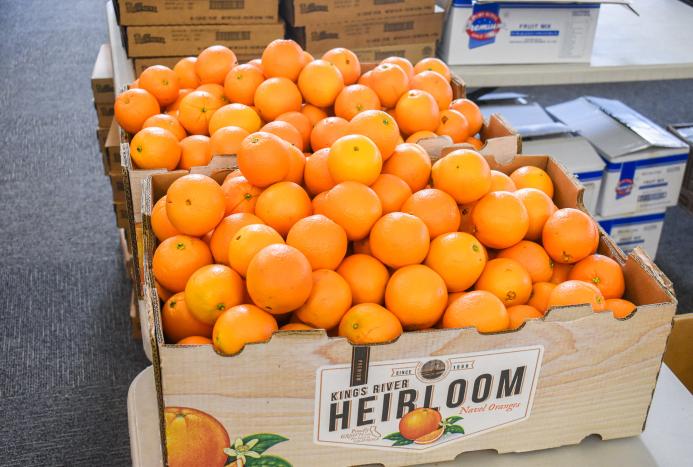
In 2025, the Foodbank helped rescue 9.6 million pounds of food from retail partners like Sam's Club, Walmart, Giant Eagle and Aldi with our fleet of trucks. Rescuing perfectly edible, nourishing food that would otherwise go to waste means feeding families experiencing hunger and taking a large step in protecting our planet and conserving our resources.
Other sustainability efforts include paper, cardboard, pallet and plastic recycling across our two campuses. In 2025, these recycling efforts helped save 2,060 trees and 848,232 gallons of water. Thanks to the generous support of LyondellBasell, the Foodbank can now recycle stretch wrap plastic with its new stretch-wrap baler. To further reduce air pollution and greenhouse gas emissions, more than 90% of the Foodbank’s warehouse equipment, including forklifts and pallet jacks, now operate on electric power. The Foodbank aims to transition nearly 100% of its warehouse equipment to electric by 2026.
Composting
The Foodbank launched a composting pilot to divert undistributed produce, dairy and bakery items. With strong staff and volunteer support, the program was successful and now operates full time at the Main Campus, with a Stark County Campus pilot underway.
The Foodbank also has a variety of programs to rescue food and reduce waste.
Community Harvest program
Community Harvest is the Foodbank’s prepared and perishable food rescue program that partners with restaurants, retail partners and other food donors to collect and deliver safe and nourishing food directly to food programs. Each week, volunteer drivers pick up food from food donors and deliver it to hunger-relief partners, including homeless shelters, meal sites and food pantries.
Agency Direct Pickup program
The Agency Direct Pickup program (ADP) is a food distribution model that empowers hunger-relief partners to pick up food donations directly from local food donors and take them back to their program. This alternative distribution model ensures that food programs with limited food storage space receive perishable products “just in time” for distribution. Because of our committed partners, this food is being rescued rather than thrown out.
Starbucks Coffee company foodshare backhaul food rescue program
Starbucks Coffee Company supports the goal of long-term improvements in food security through initiatives like their innovative FoodShare program. FoodShare is an industry leading food rescue program that utilizes reverse logistics to pick up and deliver donations from Starbucks stores to food banks. FoodShare is available across 100% of company-operated Starbucks stores in the U.S. and Canada and provides nourishing, ready-to-eat meals to local families. Once delivered, these donations are then distributed through our two onsite food pantries and our network of hunger-relief partners.
Food Banks, a Green Solution to Hunger
Each year, 92 billion pounds of food is wasted and ends up in landfills and incinerators across the country. That equates to 145 billion meals thrown away each year. Nearly 40% of all food in America is wasted.*
According to the Global FoodBanking Network (GFN), food banks operating in dozens of countries help prevent billions of kilograms of greenhouse gases from entering the atmosphere each year. The report highlights the large-scale environmental impact of food banks diverting food from landfills that contribute to greenhouse gas emissions, which then affect climate change.**
Sources
* https://www.feedingamerica.org/our-work/reduce-food-waste
** https://www.foodbanking.org/blogs/how-food-banks-mitigate-climate-change/#:~:text=Reducing%20Food%20Loss%20and%20Waste,GHG)%20from%20entering%20the%20atmosphere.